
 Deutsch
 Türkçe
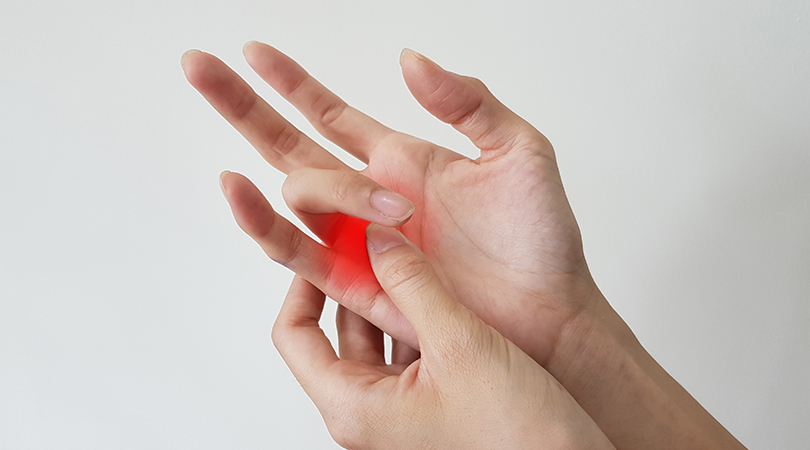
Trigger Finger
Trigger Finger is a hand problem that makes movement of the finger tendons difficult and presents with catching, locking, pain, or stiffness in the finger. It usually becomes noticeable while bending and straightening the finger and may make gripping, holding, writing, or tasks requiring hand dexterity difficult in daily life.
What Is Trigger Finger?
Trigger Finger is medically called stenosing tenosynovitis. It occurs when the tendons that move the fingers cannot glide smoothly within the tendon sheath. Friction increases during tendon movement, the finger may catch in a bent position, and sometimes a sudden snapping sensation may occur when straightening it. Because this sensation resembles releasing a trigger, it is commonly known as Trigger Finger.
This condition is most commonly seen in the thumb, ring finger, and middle finger; however, it may affect any finger. In some patients only one finger is affected, while in others complaints may develop in more than one finger. In Istanbul, Turkey, Isabel Zey evaluates the patient's hand function, pain level, daily lifestyle habits, and occupational needs together in complaints of Trigger Finger.
Treatment Summary
Operation Time
15 - 30 Minutes
Anaesthesia Type
Local Anesthesia
Hospital Stay
No Hospital Stay Required
Return to Work
2 - 5 Days
Warranty Type
Medical Follow-up Guarantee
Accommodation
Hotel
VIP Transfer
Available
What Are the Symptoms of Trigger Finger?
Symptoms of Trigger Finger may be mild at first and may be felt more prominently especially in the morning. Over time, catching during finger movements may increase and daily activities may be affected. If complaints progress, the finger may remain in a bent position or help from the other hand may be required to straighten it.
- A catching or snapping sensation in the finger
- Difficulty opening and closing the finger
- Pain or tenderness in the palm, at the base of the finger
- A feeling of stiffness in the finger in the morning
- A clicking sound or sensation during finger movement
- Locking of the finger in a bent position
- Pain during gripping
- Loss of strength in the hand or reduced willingness to use it
- A small swelling or nodule sensation at the base of the finger
These symptoms may be overlooked when mild; however, when catching and locking increase, they may significantly affect the patient’s quality of life. Therefore, evaluation at an early stage may help arrange the treatment plan in a more protective manner.
What Causes Trigger Finger?
Trigger Finger develops because the tendon becomes trapped within the canal through which it passes and cannot glide smoothly during movement. Narrowing of the tendon sheath, thickening around the tendon, or inflammatory reactions may contribute to this condition. A single cause may not always be identified; hand-use habits and the person’s general health status are often evaluated together.
- Repetitive gripping and squeezing movements
- Occupations involving intensive use of the hands
- Long-term handicrafts, repair work, manufacturing, or gardening
- Metabolic diseases such as diabetes
- Rheumatic diseases
- Strain on the hand tendons
- Thickening of the tendon sheath at the base of the finger
- Age-related changes in tendon structure
Trigger Finger may also develop in some people without obvious strain. The risk may increase especially in people with diabetes and rheumatic diseases because tendon structures may be affected. Therefore, not only the current condition of the finger but also the patient’s general medical history should be evaluated.
Who Is More Commonly Affected by Trigger Finger?
Trigger Finger may be seen more frequently in people who use their hands often. Activities such as continuous gripping, squeezing, carrying, using scissors, holding tools, knitting, or doing handicrafts may strain the tendons. Therefore, people heavily involved in housework, manual workers, musicians, technicians, manufacturing workers, and people who perform repetitive hand movements for long periods may be at risk.
The frequency may increase in middle-aged and older people. It is known to occur more often in women. In addition, conditions such as diabetes, thyroid diseases, and rheumatic diseases should be taken into account in terms of the development of Trigger Finger.
How Is Trigger Finger Diagnosed?
Diagnosis of Trigger Finger is usually made by listening to the patient’s complaints and performing a physical examination. Catching, locking, pain, and restriction of movement in the finger are evaluated. During examination, tenderness at the base of the finger, a snapping sensation during tendon movement, or a small nodule may be noticed.
Not every finger pain means Trigger Finger. Osteoarthritis, rheumatic diseases, tendon injuries, nerve compression, or trauma-related problems may cause similar complaints. Therefore, differential evaluation is important for an accurate diagnosis.
When necessary, imaging methods such as ultrasound may be used. However, in many patients, clinical examination may provide sufficient information for diagnosis. When determining the treatment plan, the duration of the complaint, how much the finger locks, the level of pain, and the patient’s need to use the hand are taken into account.
How Is Trigger Finger Treatment Planned?
Treatment of Trigger Finger is planned according to the severity of the condition and how much it affects the patient’s daily life. In mild complaints, rest, activity modification, and supportive methods may be sufficient, while injection treatment or surgical options may be considered in progressive cases.
The aim of treatment is to allow the tendon to move more freely within the finger, reduce pain, and preserve finger function. The same method is not used in every patient; the person’s age, occupation, level of hand use, accompanying diseases, and severity of complaints should be evaluated together.
Non-Surgical Treatment of Trigger Finger
Non-surgical methods may be preferred in patients with early-stage complaints of Trigger Finger. Reducing activities that strain finger movements, short-term rest, splint use, and appropriate exercises may be part of the treatment plan. The aim during this process is to reduce irritation on the tendon and ease finger movement.
- Avoiding movements that strain the finger
- A short-term rest plan
- Using a finger splint when necessary
- Treatments for pain and inflammation control as recommended by the physician
- Appropriate stretching and movement exercises
- Regulating hand-use habits
- Injection procedures in selected patients
Injection Treatment for Trigger Finger
In some patients, injection treatment may be considered to reduce swelling and sensitivity around the tendon sheath. The decision to inject should be based on the patient’s examination findings, duration of the complaint, accompanying diseases, and degree of finger locking.
Injection may not be suitable for every patient. Treatment planning should be more careful especially in people with additional diseases such as diabetes. Therefore, the patient’s medical history and expectations should be evaluated in detail before the procedure.
When Is Trigger Finger Surgery Necessary?
If Trigger Finger is advanced, if the finger locks frequently, if the patient has difficulty straightening the finger, or if complaints continue despite non-surgical treatments, surgical treatment may be considered. The aim of surgery is to release the narrowed area through which the tendon passes and help finger movement become freer.
The surgical decision should be individualized. How much the patient uses their hand, which finger is affected, the duration of the complaint, and the current health status are evaluated together. Isabel Zey attaches importance to explaining treatment options to the patient clearly so that the decision-making process proceeds in an informed manner.
Process After Trigger Finger Treatment
The process after treatment for Trigger Finger may vary according to the method used. In non-surgical treatments, it is important for the patient to follow the recommended rest and exercise plan. After an injection, activities that strain the finger may need to be avoided for a certain period. After surgery, dressing, follow-up, and appropriately starting hand movements are important parts of the recovery process.
While complaints may decrease quickly in some patients, in some cases it may take time for tendon movement to become completely comfortable. During this process, it is important to follow the physician’s recommendations, avoid unnecessary strain, and not miss follow-up appointments.
Trigger Finger Evaluation in Istanbul, Turkey
For patients applying with complaints of Trigger Finger in Istanbul, Turkey, detailed evaluation is important for an appropriate treatment plan. Isabel Zey considers complaints such as catching, locking, pain, and movement restriction in the finger together with the patient’s lifestyle and need to use the hand.
Patient information is one of the fundamental elements for the treatment process to proceed safely. Having accurate information about Trigger Finger helps the patient monitor symptoms better, know in which situations specialist advice is needed, and participate in the treatment decision in an informed way.
Frequently Asked Questions About Trigger Finger
1- Can Trigger Finger go away on its own?
Mild complaints of Trigger Finger may decrease in some patients with rest, activity modification, and supportive treatments. However, if catching, pain, or locking continues, specialist evaluation is required.
2- Which finger is Trigger Finger most commonly seen in?
Trigger Finger is most commonly seen in the thumb, ring finger, and middle finger. However, any finger may be affected, and some patients may develop complaints in more than one finger.
3- Does Trigger Finger cause pain?
Yes. Pain and tenderness may occur especially at the base of the finger, near the palm. Pain may increase together with the catching sensation when opening and closing the finger.
4- Can Trigger Finger be treated without surgery?
Non-surgical treatment options may be considered in mild and moderate cases. Rest, splinting, exercise, activity modification, and injection treatment in suitable patients may be considered.
5- Is Trigger Finger surgery mandatory?
Surgery is not required in every patient with Trigger Finger. Surgery is generally considered in cases of advanced locking, long-lasting complaints, or conditions that do not improve despite non-surgical methods.
Frequently Asked Questions About Trigger Finger
Call us or fill in the form below and we will get back to you as soon as possible.
You can reach us by filling in
the preliminary request form.



In Which Situations Is Scoliosis Treatment Considered? Scoliosis Treatment may be considered becaus..
Read more
In Which Situations Is Stem Cell Treatment in Orthopedics Considered? Stem Cell Treatment in Orthop..
Read more
In Which Situations Is Stem Cell + Exosome Treatment in Orthopedics Considered? Stem Cell + Exosome..
Read more
In Which Situations Is Anterior Cruciate Ligament (ACL) Surgery Considered? Anterior Cruciate Ligam..
Read more
In Which Situations Is Spine Surgery Considered? Spine Surgery may be considered because of differe..
Read more
In Which Situations Is Meniscus Treatment Considered? Meniscus Treatment may be considered because ..
Read more
In Which Situations Is Hip Replacement Considered? Hip Replacement may be considered because of dif..
Read more
In Which Situations Is Hip Arthroscopy Considered? Hip Arthroscopy may be considered because of dif..
Read more
In Which Situations Is Knee Replacement Considered? Knee Replacement may be considered because of d..
Read more
In Which Situations Is Knee Arthroscopy Considered? Knee Arthroscopy may be considered because of d..
Read more
In Which Situations Is Limb Lengthening Surgery Considered? Limb Lengthening Surgery may be conside..
Read more
What Are the Symptoms of Dupuytren's Disease? Symptoms of Dupuytren's Disease generally develop slo..
Read more
What Are the Symptoms of Trigger Finger? Symptoms of Trigger Finger may be mild at first and may be..
Read more
What Are the Symptoms of Carpal Tunnel Syndrome? Symptoms of Carpal Tunnel Syndrome often begin gra..
Read more
We had been struggling with a skin pigmentation problem for a long time and were unable to achieve the desired results. We found Ms. İsabel through In..
They completely transformed my tattoo-like eyebrows and made them look perfectly clean. Every procedure they perform is of high quality and beneficial..
I never expected to achieve such effective results from the very first session. Ms. Yeter truly does her job very well. She is both very attentive and..
I have been visiting them regularly once a month since their location in Nişantaşı, and sometimes even more often :) They offer treatment options acco..
I have been visiting İsabel Zey for approximately 2 years. They are very meticulous, attentive, and friendly. It is definitely a location I can recomm..
Hello, I am extremely satisfied with Ms. Yağmur. I am very pleased with her attention, care, and dedication. I am also very happy to have met her for ..
Ms. Yağmur accompanies me during my face and neck Q-Switch appointments and always provides recommendations regarding my skin and hair needs. She is s..
I can describe this clinic not as a commercial business, but as one of the rare places that truly values people. The entire team, especially Ms. İsabe..
I wanted to have Q-Switch laser treatment, but I was worried because my skin is very sensitive. I did a lot of research and came to İsabel Zey upon a ..
Let’s not simply refer to it as laser hair removal; the quality of the device and the person performing the procedure are extremely important. Ms. Hil..